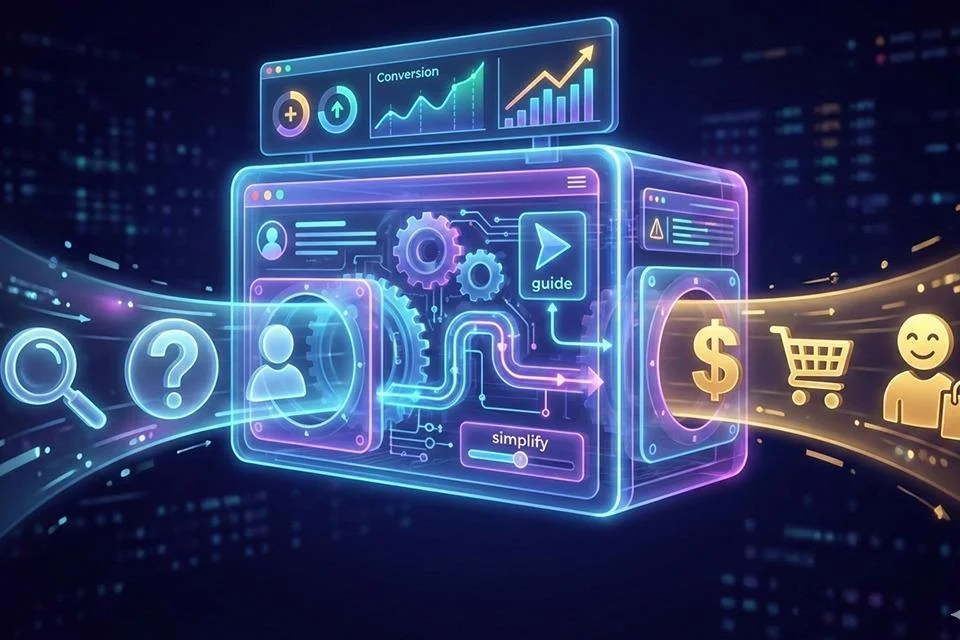
In today’s digital economy, attention is the most valuable currency. Users don’t browse websites patiently anymore, they decide within seconds whether to stay, explore, or leave. This is where user experience (UX) design becomes a powerful business advantage. A well-designed UX doesn’t just look good; it actively guides visitors toward taking action.
Why UX Matters More Than Ever
Modern users arrive at your website with high expectations. They want clarity, speed, and ease. If they encounter confusion, clutter, or slow load times, they won’t hesitate to leave.
UX design focuses on removing friction from the user journey. When visitors can immediately understand what you offer, how it benefits them, and what to do next, conversions follow naturally.
Good UX answers three questions instantly:
- Where am I?
- What can I do here?
- Why should I trust this brand?
If your website fails at any of these, you’re losing potential customers.
First Impressions Happen in Seconds
Visual hierarchy, layout, and content structure play a major role in how users perceive your brand. Clean layouts, readable typography, and intuitive navigation create confidence. On the other hand, overcrowded pages and unclear messaging signal unreliability.
UX design ensures that your most important messages, value propositions, calls to action, and trust signals, are seen first, not buried.
Speed Is Part of UX
Website speed is no longer optional. Slow pages break trust and kill momentum. Users associate performance with professionalism, and every extra second of loading time increases bounce rates.
Optimized UX includes lightweight design, efficient code, and performance-focused layouts that keep users engaged instead of frustrated.
Guiding Users, Not Forcing Them
The best UX doesn’t push, it guides. Strategic placement of buttons, forms, and navigation elements creates a natural flow from landing page to conversion point.
Whether it’s booking a service, making a purchase, or filling out a form, UX ensures the process feels effortless. Fewer steps, clear labels, and consistent design patterns reduce hesitation and improve completion rates.
Trust Is Designed, Not Assumed
Users won’t convert if they don’t feel safe. UX design integrates trust elements such as clear contact information, testimonials, recognizable branding, and secure interactions.
Consistency across pages reassures users that they’re dealing with a credible, professional business. A trustworthy experience removes doubt and encourages action.
Mobile UX Is Non-Negotiable
With most users accessing websites via mobile devices, UX design must prioritize responsiveness. Mobile UX is not about shrinking a desktop site, it’s about designing for touch, smaller screens, and on-the-go behavior.
A mobile-friendly UX keeps navigation simple, content readable, and actions easy to complete, no matter the device.
UX Turns Traffic Into Revenue
Driving traffic to your website is only half the battle. Without strong UX, that traffic won’t convert. Businesses that invest in UX see higher engagement, longer sessions, improved conversion rates, and stronger brand loyalty.
UX design transforms your website from a digital brochure into a sales tool that works 24/7.
Conclusion
UX is no longer a “nice to have.” It’s a competitive advantage. In seconds, your website either earns attention, or loses it. By prioritizing user experience, you turn browsers into buyers, clicks into conversions, and visitors into loyal customers.
If your website isn’t converting, it’s not a traffic problem, it’s a UX problem.
Turn more visitors into paying customers with conversion-focused UX design.
Contact us today and let us help you design an experience that works as hard as your business does.